The Science of Breakups: Why Couples Split and What Helps Them Heal

Why Do Couples Break Up?
Breakups are a nearly universal human experience, yet the reasons behind them often remain misunderstood. While every relationship is unique, many breakups follow recognizable patterns. Understanding why couples break up can offer valuable insights—not just for those in struggling relationships, but also for those healing from heartache.
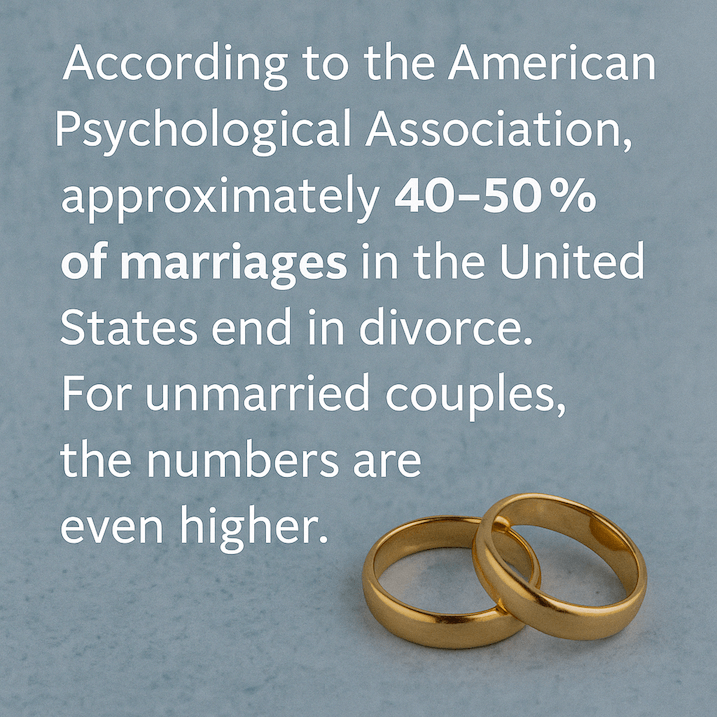
According to the American Psychological Association, approximately 40-50% of marriages in the United States end in divorce. For unmarried couples, the numbers are even higher: a 2022 study published in Social Psychological and Personality Science found that nearly 70% of romantic relationships end within the first year.
Top reasons couples break up:
Lack of communication
Infidelity
Loss of emotional intimacy
Financial stress
Differing life goals or values
Mental health struggles
Mental health conditions
Mismatched expectations around intimacy and affection
Feeling unsupported during life transitions (parenthood, job changes, relocation)
Lack of conflict resolution skills
Breakups can also exacerbate mental health conditions such as depression and anxiety, making it even more important to seek support during these times.
Modern relationships are complex, and external pressures like career demands, parenting responsibilities, and even social media can create additional strain. Sometimes, couples simply aren’t equipped with the tools to handle those pressures together. Therapy can help individuals deal with breakup-related feelings by providing structure, support, and coping strategies for distressing emotions.
A study by the Pew Research Center revealed that nearly 60% of divorced adults cited “growing apart” as the main reason for ending their relationship. Meanwhile, 44% cited conflict and arguments, and 38% said they were not prepared for the commitment. These statistics highlight how relationship issues such as communication breakdowns, unresolved conflicts, and unmet expectations often lead to breakups.
Kayla’s Insight: “One thing I hear all the time in couples therapy is, ‘We just stopped talking.’ It’s not usually one big event that ends a relationship, but a gradual disconnect. Helping couples recognize and rebuild those small moments of connection can change everything.”
Understanding these factors can normalize the pain of a breakup and highlight the importance of support and self-awareness in relationships.
Who Usually Initiates a Breakup?
Contrary to some assumptions, women initiate the majority of breakups—especially in heterosexual relationships. A 2015 study presented by the American Sociological Association found that women initiate about 69% of divorces. In dating relationships, the numbers are slightly more balanced but still skewed toward women being the initiators.
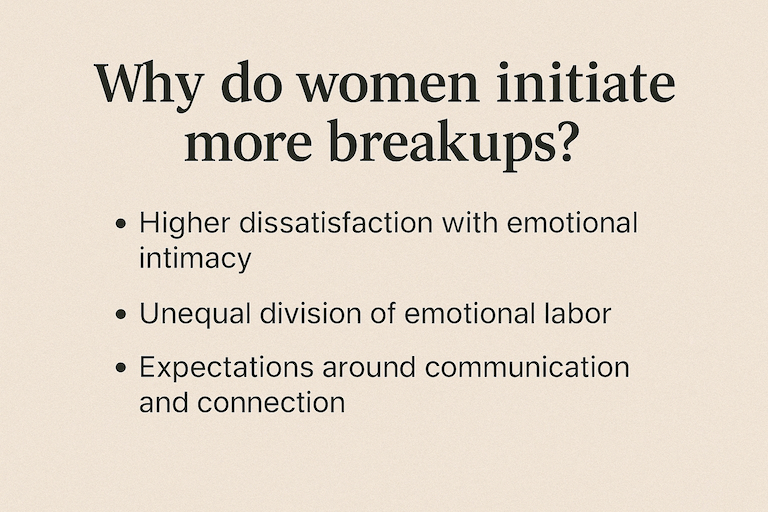
Why do women initiate more breakups?
Higher dissatisfaction with emotional intimacy
Unequal division of emotional labor
Expectations around communication and connection
These stats point to a larger trend: when emotional needs aren’t met, people are more likely to leave—even if the relationship looks stable on the outside. Therapy can help partners better understand and respond to these emotional needs before things unravel. Therapy can also help couples decide the best path forward for their relationship, whether that means staying together, rebuilding, or parting ways.
Kayla’s Insight: “Many women I work with say they feel more like a manager or caretaker than a partner. That emotional burnout leads to resentment, and eventually, they hit a breaking point. The good news? If you catch it early, it’s fixable.”
How Long Do Couples Stay Together Before Breaking Up?
There’s no perfect formula for relationship longevity, but data reveals some telling trends:
Unmarried couples often break up within 1-2 years, especially if they haven’t established long-term plans.
Married couples tend to divorce around the 8-year mark, commonly referred to as the “seven-year itch.”
Living together before marriage does not significantly lower the risk of breakup, although it can delay the decision to end things.
Long-distance couples have a slightly higher risk of breakup, but those who manage frequent communication and visits often report higher relationship satisfaction.
Interestingly, couples who seek therapy early in the relationship—before problems feel unmanageable—have a much higher rate of success. Preventative care in relationships works just like it does in physical health. In the first session of therapy after a breakup or when facing relationship challenges, couples can expect to discuss their goals, understand the process, and begin establishing a supportive environment.
Navigating Amicable Separations
Navigating an amicable separation is never easy, but it can be a transformative experience when approached with intention and support. Couples therapy, especially post breakup couples therapy, offers a safe space for both partners to express their feelings, clarify expectations, and work through unresolved issues with the guidance of a licensed therapist. This process encourages emotional support and mutual understanding, helping post breakup couples move forward with dignity and respect.
Whether you’re seeking closure, redefining boundaries, or establishing a co-parenting plan, therapy services can help you communicate openly and manage conflict in healthy ways. Online therapy makes it even more accessible for partners to receive support, no matter where they are. By focusing on the healing process together, couples can part ways with a sense of peace, knowing they’ve honored their relationship and each other’s needs.
What Happens After a Breakup?
A breakup isn’t just an emotional event—it’s a psychological and even physiological one. The brain processes emotional pain similarly to physical pain, which is why breakups can feel so devastating.
Post-breakup mental health statistics:
A study in the Journal of Neurophysiology showed increased brain activity in areas linked to physical pain during emotional rejection.
The National Institute of Mental Health reports that breakups can trigger depressive episodes, especially in those with a history of mental illness.
Anxiety, sleep disruption, and changes in appetite are also common symptoms following a breakup.
These symptoms often stem from overwhelming emotions that can make it difficult to function or move forward.
For some, the end of a relationship may bring relief. For others, it may lead to an identity crisis or feelings of unworthiness. This is where therapy can play a crucial role in the recovery process. Therapy supports emotional processing, helping individuals understand and manage their feelings so they can achieve emotional acceptance and begin to heal.
People often underestimate how deeply relationships become intertwined with identity, routine, and self-worth. When that relationship ends, it can feel like the ground disappears beneath you. Therapy teaches emotional regulation skills, equipping individuals to manage difficult feelings and communicate more effectively. It also helps build emotional resilience, enabling people to recover from relationship loss, navigate grief, and transform emotional pain into personal growth. By focusing on a person's self-esteem and emotional well-being, therapy supports healing and encourages self-love after a breakup. Therapy helps rebuild that foundation by challenging negative self-beliefs and building confidence in your ability to be self-reliant and worthy of love.
Co-Parenting Dynamics
Co-parenting after a breakup brings its own set of challenges, but with the right support, it’s possible to create a positive and stable environment for your child. Couples therapy can help partners develop a co-parenting plan that prioritizes the child’s well-being while respecting each parent’s boundaries and needs. Through therapy, partners learn effective communication skills, conflict resolution techniques, and strategies for managing strong emotions.
Individual therapy also plays a crucial role, offering each partner a safe space to process their feelings and develop coping strategies for the ups and downs of co-parenting. By working together and seeking support, couples can transform their relationship from romantic partners to collaborative co-parents, ensuring their child feels secure and loved throughout the process.
How Therapy Can Help After a Breakup
At South Denver Therapy, we often see individuals and couples navigating the emotional turbulence that follows a breakup. Choosing a therapist who specializes in breakup therapy is essential for effective healing. It is important to find the right therapist for your needs, ensuring they have experience and compatibility with your situation. The therapy process typically involves an initial assessment, goal setting, and structured support to help you understand relationship dynamics and develop coping strategies. Seeking professional help after a breakup can make a significant difference in your emotional recovery and long-term well-being. Therapy provides a safe space to process emotions, rebuild self-worth, and develop healthier relationship patterns.
Individual Therapy
Breakups can stir up unresolved trauma, attachment issues, and negative self-beliefs. Individual therapy helps you:
Process grief and loss
Rebuild self-esteem
Understand your relationship patterns
Develop healthier coping strategies
Individual therapy focuses on personal healing, growth, and coping strategies tailored to your unique needs after a breakup.
Techniques like EMDR therapy (Eye Movement Desensitization and Reprocessing) can be especially powerful for those who experienced emotional abuse, betrayal, or trauma in their relationship.
Many clients find that EMDR helps them not only process the breakup itself, but also the deeper wounds it triggered—sometimes going back years. Healing from a breakup isn’t just about moving on from a person; it’s about healing what that person represented. Personal reflection and self-reflection are essential parts of this process, helping you understand yourself and your relational patterns to facilitate deeper healing.
Ultimately, individual therapy fosters personal empowerment, helping you rebuild safety, self-understanding, and growth after a breakup.
Couples Therapy (Yes, Even Post-Breakup)
Some couples seek therapy after a breakup to:
Find closure in a safe, respectful environment
Learn to co-parent effectively
Explore the possibility of reconciliation with support
A conscious uncoupling approach can provide a respectful and healing process for separation, emphasizing emotional healing and positive closure. Mutual respect is essential throughout the therapy process to ensure both individuals feel heard and valued.
Counseling can help create clear and specific agreements for co-parenting, setting boundaries to prevent misunderstandings about child-rearing.
Therapy can also help couples explore the possibility of a renewed relationship by rebuilding trust and addressing unresolved issues.
Even if reconciliation isn’t the goal, therapy can help both parties understand what went wrong and avoid repeating those patterns in future relationships. Examining what led to the breakup can inform healthier choices moving forward. It is important that both partners are willing to participate in therapy, as progress can be limited if only one partner is interested, especially in situations involving power imbalances.
Kayla’s Insight: “It’s amazing how much healing can happen just from having a structured, safe place to talk. Even if the couple doesn’t get back together, there’s so much value in understanding your role in the relationship’s story.”
Building a Support Network
After a breakup, building a strong support network is essential for emotional healing and resilience. Surrounding yourself with friends, family, support groups, or online communities can make a significant difference in how you feel and cope with the changes. Therapy services, including online therapy, provide a safe and confidential space to process your emotions, develop healthy coping strategies, and receive guidance from a compassionate therapist.
Connecting with others who understand what you’re going through can help you feel less isolated and more empowered to move forward. Whether it’s sharing your story in a support group or reaching out to a therapist for one-on-one support, building a network of caring people is a vital part of the healing process.
Can You Stay Friends With an Ex?
After a breakup, many people wonder whether it’s possible—or healthy—to stay friends with an ex. The answer isn’t one-size-fits-all. Reflecting on the past can help individuals decide if pursuing a friendship is truly healthy or if it may hinder their healing.
While some former partners can maintain a friendship, especially if the breakup was mutual and respectful, it often requires time, space, and very clear boundaries. Understanding your past relationship is key to setting boundaries that protect your emotional well-being. Jumping into a friendship too soon can blur emotional lines, reignite hurt feelings, or prevent full healing.
Therapy can help individuals navigate this tricky dynamic, ensuring both people feel safe and emotionally protected. It can also support learning from past relationships to avoid repeating unhealthy patterns in future connections. In cases where there are shared children, staying civil and cooperative is essential—but that doesn’t necessarily mean being close friends.
Kayla’s Insight: “I often ask clients, ‘Are you truly ready to be friends, or are you holding on to avoid feeling the full grief of the breakup?’ There’s no shame in needing distance.”
What Breakups Teach Us About Ourselves
Although painful, breakups can be incredibly revealing. They expose our unmet needs, attachment styles, boundaries, and communication habits. In many cases, a breakup is the beginning of a deeper journey into personal growth and emotional healing. Therapy can help individuals focus on their own growth and healing, providing the mental clarity needed to move forward. Embracing this process allows you to step into a new chapter with resilience and hope.
Common self-discoveries after a breakup:
Realizing patterns of people-pleasing or emotional avoidance
Identifying what you truly need in a healthy relationship
Learning to trust your intuition and assert boundaries
Therapy after a breakup isn’t just about recovering from the pain—it’s about becoming more grounded, self-aware, and intentional in your next chapter. With the right support, positive outcomes such as growth, healing, and renewed confidence are possible.
Kayla’s Insight: “One of the most empowering things I see in post-breakup therapy is when a client says, ‘Now I know what I won’t settle for again.’ That’s when real healing takes root.”
Why Do Couples Split Up After Having a Baby?
Bringing a baby into the world is one of life’s most joyful milestones—but it’s also one of the most stressful transitions a couple can face. Research shows that up to two-thirds of couples experience a significant decline in relationship satisfaction during the first year after having a child. Therapy often helps couples address the emotional intricacies and logistical concerns involved in co-parenting after separation.
Why the shift happens:
Drastically reduced sleep and increased stress
Shifts in identity, especially for the birthing parent
Lack of intimacy and physical connection
Feeling emotionally unsupported or misunderstood
Disagreements on parenting styles or roles
What was once a relationship centered on connection and shared time suddenly becomes focused on survival and caretaking. When communication is already strained, the pressure of parenting can widen existing cracks in the relationship.
Kayla’s Insight: “Many new parents come to therapy saying, ‘We love our baby, but we feel like roommates.’ It’s common to feel distant during this transition, but with the right support, couples can learn to reconnect and grow through it.”
Couples therapy can be incredibly beneficial during the postpartum period—not because something is broken, but because your relationship deserves the same care and attention as your new child. Therapy also supports couples in moving forward after a breakup or major life transition, helping them heal, grow, and open up to new opportunities.
Creating a New Routine
Establishing a new routine is a powerful step in the healing process after a breakup. Trying new activities, joining clubs or groups that align with your interests, or starting a regular exercise or self-care practice can help you rediscover your sense of self and purpose outside of the relationship. Focusing on personal growth and development allows you to rebuild your life on your own terms.
A therapist can offer guidance and encouragement as you navigate this transition, helping you set goals and create healthy habits that support your well-being. For some, couples therapy may also be helpful in developing new routines and finding a sense of normalcy, especially when co-parenting or maintaining a connection is important. Embracing change and investing in yourself can lead to renewed confidence, healing, and a deeper understanding of what you want from life and future relationships.
Healing Isn't Linear, But It Is Possible
Everyone processes breakups differently. Some bounce back quickly; others need time to grieve and rediscover themselves. What matters most is not rushing the process. Therapy is not about "fixing" you—it's about helping you reconnect with your values, identity, and resilience.
Give yourself space to feel all the feelings—grief, anger, sadness, even relief. Each one has something to teach you. Learning mindfulness can help individuals be more present and manage racing thoughts after a breakup. With time, support, and self-compassion, the pain fades and clarity takes its place.
If you're in the Castle Rock or Denver area and going through a breakup, our therapists at South Denver Therapy are here to support you—whether in person or virtually. Healing is possible, and you don't have to go through it alone.
Frequently Asked Questions
1. Why do most couples break up?
Most couples break up due to poor communication, emotional disconnect, infidelity, financial stress, or simply growing apart. Therapy can help uncover and address these issues before they lead to a split.
2. What are the top reasons for breakups in long-term relationships?
In long-term relationships, common reasons include unmet emotional needs, unresolved conflict, and life goals drifting apart. These issues often build gradually, which is why early intervention through counseling can be so valuable.
3. Why do couples break up after 10 years or more?
Couples who break up after a decade or more often cite emotional neglect, lack of personal growth, or “empty nest” transitions. Changes in identity or life purpose during midlife can also play a role.
4. Who usually initiates breakups?
Studies show that women initiate the majority of breakups in heterosexual relationships, often due to emotional dissatisfaction or unequal emotional labor.
5. How can therapy help after a breakup?
Therapy helps individuals process grief, rebuild self-esteem, and understand their emotional patterns. EMDR therapy can also help resolve trauma tied to the relationship.
6. Can couples therapy still help after a breakup?
Yes. Couples therapy can support closure, co-parenting, or even reconciliation. It also helps both partners gain clarity and prevent repeating unhealthy patterns in future relationships.
7. How long does it take to emotionally heal from a breakup?
Healing timelines vary widely, but many people feel significantly better within 3–6 months with support. Therapy can help speed up emotional recovery by providing structure and tools for reflection and growth.