
How It Works
Take this free quiz to discover your attachment style in under 2 minutes. No email or signup required to see your results.
Answer 12 Quick Questions
Learn Your Attachment Style
Get Tips to Strengthen Relationships
Attachment Style Quiz
Discover your likely attachment style — Secure, Anxious, Avoidant, or Disorganized — and learn what it means for your relationships.
⏱️ 12 quick questions • rate each 1–5 (1 = Strongly Disagree, 5 = Strongly Agree)

What Is an Attachment Style?
Your attachment style is like a blueprint for how you show up in relationships. It shapes the way you connect, communicate, and handle conflict with romantic partners, friends, and family members. Most people don't even realize they have one until something goes wrong in a relationship and they start asking "why do I always do this?"
Attachment theory was first developed by psychologist John Bowlby in the 1950s and later expanded by Mary Ainsworth through her "Strange Situation" research with infants and caregivers. What started as a way to understand baby-parent bonding has since become one of the most powerful tools for understanding adult relationships. Today, attachment research is used by relationship therapists, couples counselors, and psychologists worldwide.
The basic idea? The way your caregivers responded to your needs as a child created patterns that you carry into adult relationships. If your parents were consistently warm and available, you probably feel pretty secure in relationships. If they were hot-and-cold or emotionally distant, you might find yourself feeling anxious or pulling away when things get close.
The good news is that attachment styles aren't set in stone. With awareness and the right support, people move toward secure attachment all the time. That's actually one of the main goals in couples therapy - helping partners understand each other's attachment needs and create a more secure bond together.
The Four Attachment Styles Explained
Researchers have identified four main attachment styles that show up in adult relationships. Most people lean toward one primary style, though you might recognize bits of yourself in more than one. Here's what each looks like in real life:
Secure Attachment
People with secure attachment feel comfortable with closeness and don't worry much about being abandoned. They can ask for what they need and trust their partner to show up. About 50-60% of adults fall into this category.
- Comfortable expressing emotions
- Can depend on others without losing themselves
- Handles conflict without shutting down or blowing up
- Trusts partner's intentions
Anxious Attachment
Anxious attachment shows up as a hunger for closeness and constant worry about the relationship. These folks often feel like they care more than their partner does, and small things like a slow text response can trigger big fears. About 20% of adults have this style.
- Needs frequent reassurance
- Sensitive to partner's moods and availability
- Worries about being abandoned
- May appear "clingy" or "needy" to others
Avoidant Attachment
Avoidant attachment looks like a strong preference for independence and discomfort with emotional closeness. These people often feel like they don't need much from others and may pull back when relationships get intense. About 25% of adults fall here.
- Values independence highly
- Uncomfortable with emotional vulnerability
- May seem distant or emotionally unavailable
- Needs space during conflict
Disorganized Attachment
Disorganized attachment (sometimes called fearful-avoidant) is the trickiest style. People with this pattern both crave and fear closeness, often swinging between pushing people away and desperately wanting connection. About 5-10% of adults have this style.
- Wants closeness but fears getting hurt
- May have "hot and cold" behavior
- Often linked to early trauma or loss
- Can feel overwhelming emotions in relationships
How Does Attachment Style Affect Relationships?
Your attachment style shows up in pretty much every close relationship you have - from who you're attracted to, to how you fight, to whether you feel satisfied in your relationships. Here's how each style tends to play out:
| Situation | Secure Response | Anxious Response | Avoidant Response |
|---|---|---|---|
| Partner doesn't text back for hours | Assumes they're busy; goes about their day | Worries something is wrong; checks phone constantly | Appreciates the space; might not notice |
| During an argument | Stays engaged; works toward resolution | Fears the argument means the relationship is ending | Shuts down or needs to leave the conversation |
| Partner asks for more closeness | Happy to connect; finds balance | Relieved and eager to be closer | Feels overwhelmed or suffocated |
| When stressed | Reaches out to partner for support | Needs partner's reassurance to calm down | Prefers to handle it alone |
One of the most common relationship patterns we see in couples counseling is the anxious-avoidant dance. One partner pursues closeness while the other pulls away, which makes the anxious partner pursue even harder, which makes the avoidant partner pull away even more. It's a painful cycle, but once couples understand what's happening, they can start to break it.
How Attachment Styles Form
Your attachment style started forming before you could even talk. When you cried as a baby, did your caregivers come quickly and comfort you? Were they sometimes there and sometimes not? Were they scary or unpredictable? Your little brain was paying attention and learning what to expect from relationships.
Secure attachment usually develops when caregivers are consistent, warm, and responsive. The child learns "when I have a need, someone will help me meet it." This becomes the foundation for trusting others.
Anxious attachment often forms when caregiving is inconsistent. Sometimes the parent is attuned and available, other times they're distracted or unavailable. The child learns to amp up their distress signals to get attention, and this pattern carries into adult relationships.
Avoidant attachment typically develops when caregivers are emotionally distant or dismissive of the child's needs. The child learns to suppress their needs and rely on themselves. "I don't need anyone" becomes a protective strategy.
Disorganized attachment usually results from frightening or chaotic caregiving, often involving abuse, neglect, or a parent's own unresolved trauma. The child faces an impossible dilemma - the person who should be their safe haven is also a source of fear.
Can Your Attachment Style Change?
Yes - and this is the part that gives people hope. Attachment styles are patterns, not permanent personality traits. Research shows that about 25% of people naturally shift their attachment style over time, usually becoming more secure through positive relationship experiences.
Therapy. Working with a therapist who understands attachment (like those trained in Emotionally Focused Therapy or EMDR) can help you understand your patterns and develop more secure ways of relating.
A secure partner. Being in a relationship with someone who has secure attachment can actually help you become more secure over time.
Self-awareness. Just knowing your attachment style is a huge first step. Once you can name the pattern, you can catch yourself in the moment and make different choices.
Practice. Healing attachment takes repetition. You need many experiences of reaching out for connection and having it go well.
Tips for Each Attachment Style
If You're Anxiously Attached:
Your superpower is your attunement to relationships - you notice things others miss. The growth edge is learning to self-soothe and trust that connection will be there even when you can't see constant evidence of it. Try practicing sitting with the discomfort of uncertainty without immediately seeking reassurance.
If You're Avoidantly Attached:
Your superpower is your independence and ability to stay calm under pressure. The growth edge is letting yourself need people and staying present when emotions run high. Try small experiments with vulnerability - share something you normally keep private.
If You Have Disorganized Attachment:
Your experience has made you incredibly resilient and often deeply empathic. The growth edge is regulating your nervous system so closeness doesn't feel so overwhelming. Trauma-informed approaches like EMDR therapy can be especially helpful.
How Couples Therapy Helps Attachment Issues
When couples come to therapy because of constant fighting, emotional distance, or trust issues, attachment is usually at the root.
Understand the pattern, not blame each other. When you can see the anxious-avoidant dance as a pattern you're both caught in, it takes the blame off either person.
Recognize attachment needs underneath the conflict. Most fights aren't really about the dishes or the budget. They're about "do you see me?" and "can I count on you?"
Create new, corrective experiences. The antidote to insecure attachment is repeated experiences of reaching for your partner and having them respond.
Heal old wounds. Sometimes attachment injuries from the relationship itself need specific attention. Infidelity therapy and affair recovery work addresses these wounds directly.
Ready to Build a More Secure Relationship?
Understanding your attachment style is just the beginning. Our couples therapists specialize in helping partners create the secure, connected relationship they've always wanted.
Book a Free 15-Minute ConsultationFrequently Asked Questions About Attachment Styles
Free Resources for Understanding Attachment
• Couples Journal & Worksheets - Communication exercises for couples
• What Are Attachment Styles? - Our comprehensive guide
• Secure Attachment Style - In-depth look at healthy attachment
• Anxious Attachment Style - Understanding preoccupied attachment
• Avoidant Attachment Style - Understanding dismissive patterns
• Disorganized Attachment Style - The fearful-avoidant pattern
About This Quiz
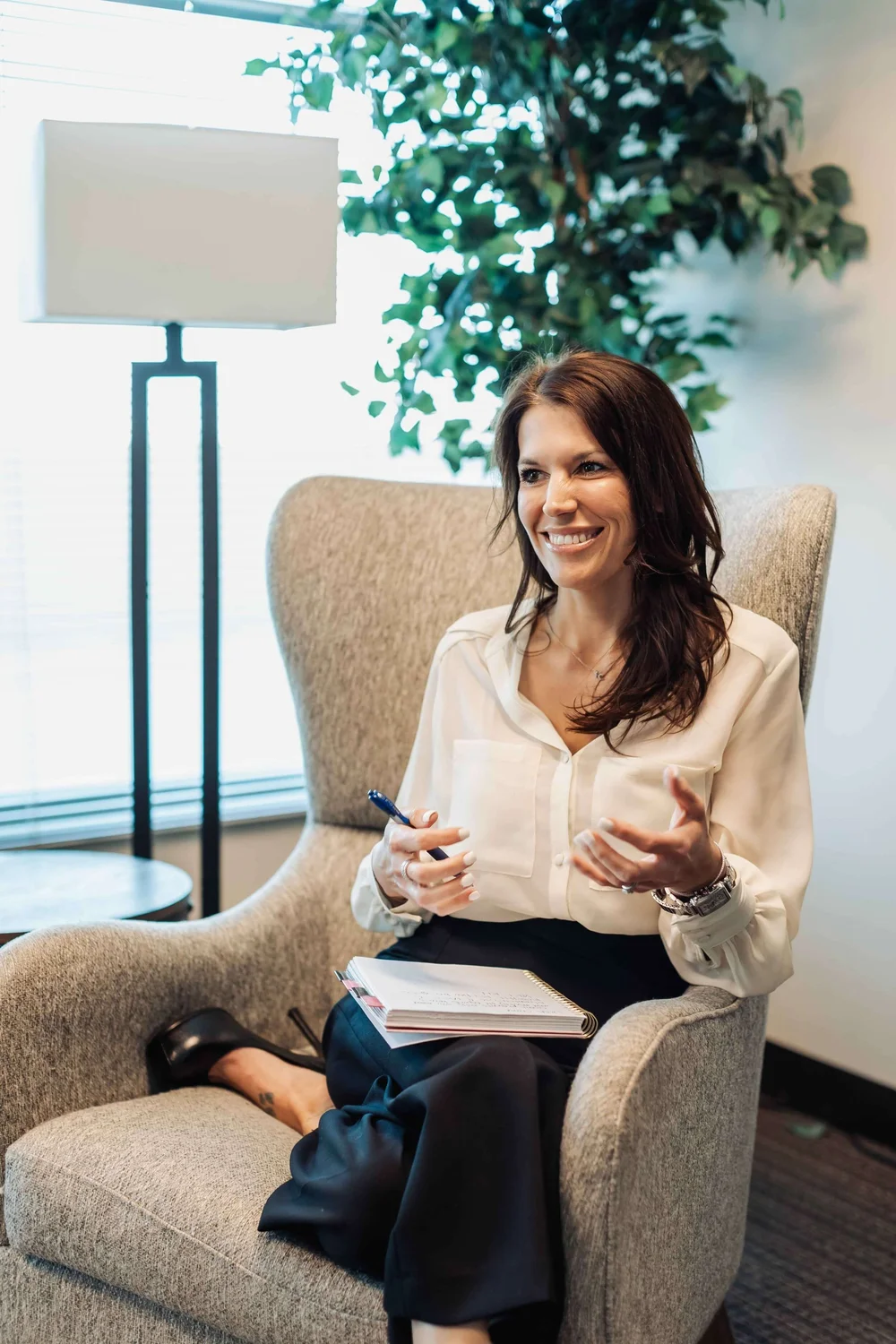
Created in consultation with Kayla Crane, LMFT | SART-Trained Couples Therapist
This attachment style quiz is based on the ECR-12 (Experiences in Close Relationships Scale - 12 Item), a validated research instrument used by psychologists and relationship researchers worldwide. While no online quiz can replace a thorough clinical assessment, this tool can give you valuable insight into your relationship patterns.
Kayla specializes in couples counseling at our Castle Rock office, with advanced training in affair recovery (SART) and attachment-focused therapy.
Serving Castle Rock, Denver, and All of Colorado
South Denver Therapy offers couples counseling, individual therapy, and EMDR therapy at our Castle Rock offices. We also see clients throughout Colorado via online therapy.