Secure Attachment Style: What It Looks Like and How to Build It

Key Takeaways
Secure attachment feels safe with closeness and comfortable with space.
It shows up as trust, clear needs, and steady repair after conflict.
You can build secure habits with small daily steps and practice.
Partners grow secure together by being open, kind, and consistent.
Not sure of your style yet? Take the free Attachment Style Quiz and get results in under two minutes.

Introduction to Attachment Theory
Attachment theory is a foundational concept in psychology that explains how our earliest relationships shape the way we connect with others throughout life. Developed by John Bowlby and expanded by Mary Ainsworth, attachment theory highlights the importance of the emotional bonds we form with our primary caregivers in early childhood. When caregivers are responsive and consistent, securely attached children tend to grow up feeling safe, valued, and able to trust others. This secure attachment becomes the groundwork for healthy relationships, emotional regulation, and ongoing personal growth. As securely attached children mature, they are more likely to develop positive attachment styles, marked by trust, open communication, and the ability to both give and receive support. Understanding attachment theory helps us see why secure attachment is so vital for our well-being and relationship success.

Understanding Attachment Styles
Attachment styles describe the different ways people relate to others in close relationships. The main attachment styles are secure, anxious, avoidant, and disorganized. Secure attachment is considered the healthiest, as it allows people to feel comfortable with closeness, set healthy boundaries, and handle disagreements constructively. In contrast, insecure attachment styles—such as anxious, avoidant, or disorganized—can make it harder to trust, communicate, or feel safe in relationships. Recognizing your own attachment style is a powerful step toward building healthier relationships and improving self esteem. By learning the signs of secure attachment and understanding how different attachment styles show up in daily life, you can start to shift patterns that no longer serve you and move toward a more secure, fulfilling way of connecting with others.
What Secure Attachment Means in Attachment Theory
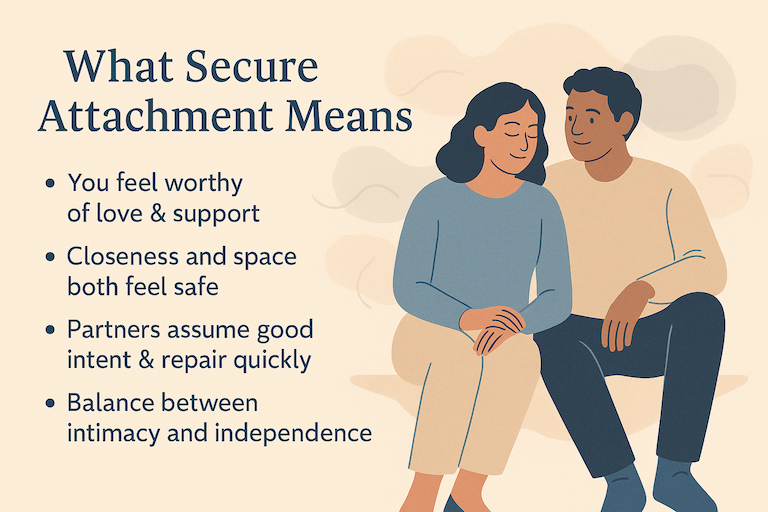
Secure attachment is the felt sense that you are worthy of love and that safe people will try to show up for you. Closeness feels safe and time alone feels safe too. A secure attachment provides a secure base for exploration and emotional growth, allowing you to feel supported as you navigate challenges. Emotional closeness is a key feature of secure attachment, enabling you to connect deeply with others while maintaining your sense of self. You can share feelings, listen to others, and stay steady when emotions run high. In secure bonds, partners assume good intent, check the facts, and come back to repair after tense moments. Secure attachment allows for a healthy balance between intimacy and independence.
How it feels in daily life
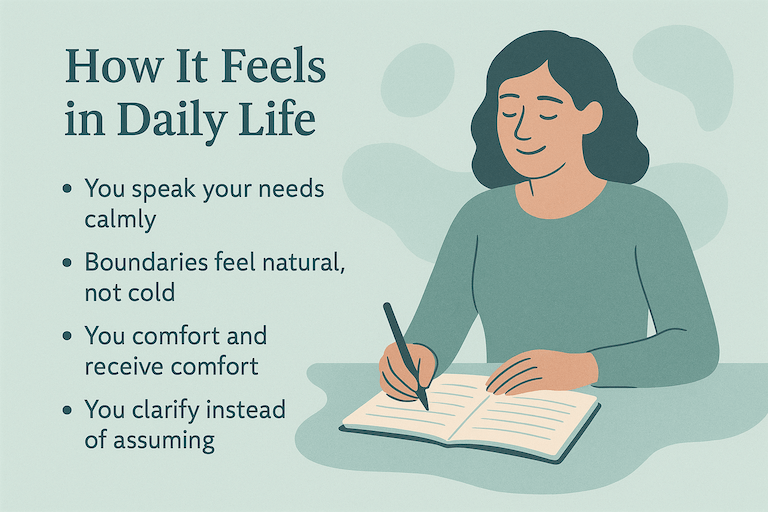
You trust first, then clarify when something feels off.
You say what you need and can hear a no without panic.
You comfort your partner and also let yourself be comforted.
You keep boundaries without pulling away in anger.
Why it matters
Security helps your nervous system stay regulated during conflict. You can slow down, use simple words, and solve the problem instead of attacking the person. Over time, this creates a stable, warm bond where both partners feel seen and safe. Secure attachment helps individuals feel secure in their relationships, fostering confidence and comfort. It also leads to a deep sense of trust and safety, which supports lasting connection. Adults with secure attachment styles are more adept at emotional regulation and managing stress, which further strengthens their relationships.

Signs of Secure Attachment: How You May Be Secure
You say what you feel and ask for what you need.
You can be close without losing yourself.
You handle conflict with respect and calm repair.
You trust first, then check facts if something feels off.
You give reassurance and you can receive it too.
These signs contribute to higher relationship quality and are grounded in mutual respect between partners.
Are You Securely Attached? Check Your Signs
The more statements that feel true for you, the more secure your attachment style. It's okay if not all apply—security is a practice, not perfection.
5-8 checked: Strong secure attachment traits
2-4 checked: Growing toward security (you're on the right path!)
0-1 checked: Building security starts here—try the exercises below

Common Strengths of Securely Attached People
Secure people communicate clearly and keep their word. They offer space without using silence to punish. After conflict they check in, repair, and follow through. They enjoy closeness and also protect their time and energy so the relationship stays balanced. Secure attachment supports healthy coping mechanisms and positive self esteem, which benefit personal relationships of all kinds, including with romantic partners, friends, and family.
Everyday examples
Sends a quick heads up text if running late and gives a new time.
Uses simple “I feel” and “I need” statements instead of blame.
Asks before assuming, then reflects back what they heard.
Suggests a short break during tension and sets a time to reconnect.
Keeps small promises like call times, plans, and budgets. Securely attached individuals have better social skills and empathy, enhancing their social interactions and making these habits more effective.
How Secure Attachment Style Handles Conflict
In conflict, secure partners slow down and steady their body first. They get curious, not defensive, and agree on one clear goal for the talk. They use short “I feel… I need…” sentences and stick to one topic at a time. If feelings run hot, they take a short break and set a time to return, then repair and move forward together. Affect regulation is central to this process, allowing partners to manage their emotions and respond thoughtfully rather than react impulsively. Adults with secure attachment are better at conflict resolution and maintaining a secure relationship, which helps them navigate challenges effectively.
Repair phrases you can try
I care about you. Here is what I felt and what I need next.
I want to understand you better. Can you say that in a different way?
I am sorry for my part. Here is how I will handle this next time.
I got triggered and need ten minutes. I will come back at 6:30 to talk.
What I heard you say is _____. Did I get that right?
Thank you for telling me. Here is one change I can make today.
Secure Repair Scripts: Use These Exact Words
Copy these word-for-word during conflict. Secure attachment means having go-to phrases that work.
"I'm feeling overwhelmed and need 15 minutes to calm down. I'll be back at [specific time] and we can talk then. I'm not leaving the conversation."
"I'm sorry I said that. I was triggered and that wasn't fair. What I really meant was _____. How can I make this right?"
"I want to understand you better. Can you say that in a different way? I heard _____, but I might be missing something."
"I hear you and I care about you. Right now I'm too activated to listen well. Can we pause for [time] and come back to this?"
"Thank you for working through that with me. I love you. What's one thing I can do differently next time to help us both feel heard?"
"I'm feeling anxious about us right now. Can you tell me one thing you appreciate about our relationship? That would really help me."
Pro tip: Screenshot these cards and save them to your phone. In heated moments, having the exact words ready makes all the difference.
Simple steps during conflict
Breathe slow and drop your shoulders.
Name one feeling and one need.
Ask before assuming.
Focus on the problem, not the person.
How Secure Attachment Responds Differently
See the difference between secure and insecure reactions in common relationship moments
Scenario: Your partner seems distant after work
Insecure Response
"They must be upset with me. What did I do wrong? I should just leave them alone... or maybe I should ask them repeatedly if they're mad."
Secure Response
"You seem quiet tonight. I'm here if you want to talk. If you need space, that's okay too. Let me know how I can help."
Scenario: You had a disagreement this morning
Insecure Response
"I'll just pretend it didn't happen. Bringing it up again will make things worse. If they cared, they'd apologize first."
Secure Response
"I've been thinking about this morning. I'm sorry for my part. Can we talk for a few minutes tonight and figure this out together?"
Scenario: Your partner cancels plans last minute
Insecure Response
"They don't care about me. I'll cancel plans next time too and see how they like it. I shouldn't have to say I'm hurt."
Secure Response
"I was looking forward to tonight and feel disappointed. I understand things come up. Can we reschedule for this weekend?"
The Secure Difference: Secure attachment assumes good intent, communicates clearly, and focuses on repair rather than blame or avoidance.

Emotional Regulation and Secure Attachment Style
Emotional regulation—the ability to manage and respond to your feelings in healthy ways—is closely linked to your attachment style. Secure attachments foster strong emotional regulation skills, making it easier to stay calm during stress, express needs clearly, and resolve conflicts without escalating. Securely attached individuals are generally better at recognizing their emotions and responding thoughtfully, which supports healthier relationships and smoother communication. On the other hand, insecure attachment styles can make emotional regulation more challenging, leading to heightened anxiety, impulsive reactions, or withdrawal during difficult moments. Strengthening your emotional regulation skills is a key part of developing secure attachments and building relationships that feel safe, supportive, and resilient.

How Childhood Experiences Shape Secure Attachment
Childhood trauma can deeply affect the way attachment develops, often leading to insecure attachment styles and challenges in forming close, trusting relationships. When early experiences are marked by inconsistency, neglect, or fear, the attachment process can be disrupted, making it harder to feel safe with others or regulate emotions. However, it’s important to remember that attachment styles are not set in stone. With support from mental health professionals, self-reflection, and positive relationship experiences, it is possible to heal from childhood trauma and develop a secure attachment style. Acknowledging the impact of past trauma is a courageous first step toward change. By seeking support, practicing emotional regulation, and building new, healthy connections, you can move toward greater attachment security and emotional well-being.

Not Secure Yet? How to Build a More Secure Attachment Style
Secure attachment is a set of skills you can learn with small daily reps. You do not need to be perfect. Progress comes from steady practice and kind self talk. Secure attachment develops through consistent, responsive actions and self-compassion, helping your body learn that both closeness and space can be safe. Secure attachment fosters trust, emotional expression, and resilience, supporting higher self-esteem and a positive self-concept, so you feel valued and capable in your relationships and personal life.
Daily micro-habits
One feeling and one need in a single sentence.
One specific appreciation to your partner each day.
One gentler thought to replace a harsh story about yourself.
One short repair after a tense moment.
One clear boundary stated with kindness.
These daily practices promote secure attachment by reinforcing trust and emotional safety.
Your 7-Day Secure Attachment Challenge
One small action each day builds lasting security. Check off each day as you complete it.
Repeat this weekly. Security grows through consistent practice, not perfection.
Weekly habits
A 15 minute check in with three prompts: what felt good, what felt hard, what would help next week.
A planned connection time like a walk or phone off dinner.
A quick review of any repairs you still owe and when you will do them.
Regular weekly habits also promote secure attachment by building consistent, supportive connection.
Exercises to Strengthen Secure Attachment Style
30-Second Soothe
Place a hand on your chest or belly. Breathe in for four and out for six while you soften your shoulders. Say a kind line to yourself like “I am safe and I can handle this.” Repeat three rounds. Notice when your body shifts from tight to a little looser. These exercises help reinforce positive attachment behavior by encouraging self-soothing and comfort-seeking actions.
Two Feelings, One Need
Keep it short and clear. Name two feelings and one need in a single sentence. Example: “I feel anxious and lonely. I need a hug and a few words that we are okay.” Use this in tense moments so the other person knows how to help.
Five Kind Texts Practice
Send one caring text each day for five days. Keep it specific and simple. Examples: “I loved our walk,” “Thinking of you before your meeting,” “Thank you for dinner last night.” Do not add fixes or advice. Aim for warmth and sincerity. This practice provides emotional support and helps strengthen the bond between you and your loved one.
The Weekly Check-InSet a 15 minute meeting once a week. Phones away. Each person answers three prompts: what felt good, what felt hard, what would help next week. End with one small plan you will both try, like a midweek call or a screen-free dinner. Regular check-ins offer emotional support and reinforce secure attachment behavior in your relationship.
Building Healthy Relationships
Healthy relationships are built on a foundation of secure attachment, open communication, and strong emotional regulation skills. Securely attached individuals tend to experience more satisfying romantic relationships and deeper connections with friends and family. To foster healthier relationships, focus on developing a secure attachment style by reflecting on your needs, seeking support when needed, and practicing skills that promote emotional regulation.
Building healthy communication habits—like active listening, empathy, and honest sharing—also strengthens your bonds and helps resolve conflicts more effectively. By prioritizing secure attachment and nurturing your relationships, you create space for greater intimacy, trust, and fulfillment in every area of your life.

How to Be Secure With an Anxious Partner
Offer clear reassurance without long explanations. Keep your promises, be on time, and send a quick update if plans change. When they share worry, listen for the feeling beneath it instead of correcting them. Gentle consistency helps their nervous system relax and builds trust over time. This approach supports the attachment system by providing a sense of safety and comfort, and helps shift relationship patterns toward greater security.
Try this:“I care about you. I’ll text when I arrive. If I’m delayed, I’ll update you.” or “I can see you’re worried. I’m here and we’re okay. Let’s talk tonight after work.”

How to Be Secure With an Avoidant Partner
Respect their need for space while staying warm and consistent. Avoid chasing or pushing for talks when they pull back. Instead, set clear times to reconnect and keep those commitments. Short, calm check-ins help them feel safe to open up at their own pace. These strategies are especially helpful when navigating avoidant attachment styles, where a partner may need more autonomy and distance before feeling comfortable to reconnect. Celebrate small moments of sharing instead of asking for big emotional leaps.
Try this:“I want time with you and I also respect your space. Can we talk at 7 and each share one feeling and one good thing from the day.” or “I know you need a little quiet time. I’ll give you space now and check in after dinner so we can reconnect.”
How to Show Up Securely for Each Attachment Style
Being Secure with an Anxious Partner
Give predictable reassurance: "I'll text when I arrive" and then actually do it
Listen for the feeling: Don't correct their worry, acknowledge it: "I hear you're anxious. We're okay."
Keep small promises: Being on time and following through builds their sense of safety
What NOT to say: "You're overreacting" or "Stop being so needy" — this confirms their fear of being too much
Being Secure with an Avoidant Partner
Respect their space: "Take the time you need, I'll be here when you're ready"
Set clear reconnection times: "Let's each think about it and talk at 7pm"
Celebrate small shares: When they open up, even a little, respond with warmth not demands for more
What NOT to say: "Why won't you just open up?" or chase them when they withdraw — this increases their need for distance
Being Secure with a Disorganized Partner
Be extremely consistent: Keep routines, times, and promises—predictability builds safety
Stay calm during big emotions: Ground yourself first, then offer gentle support
Use slow pacing: Don't rush closeness or demand vulnerability—let it unfold gradually
What NOT to say: "You're sending mixed signals" in an accusatory way — acknowledge the pattern with compassion instead
The Secure Superpower: You can adapt your approach to meet different needs while staying grounded in your own worth and boundaries.
Parenting and Building Secure Attachment in Children
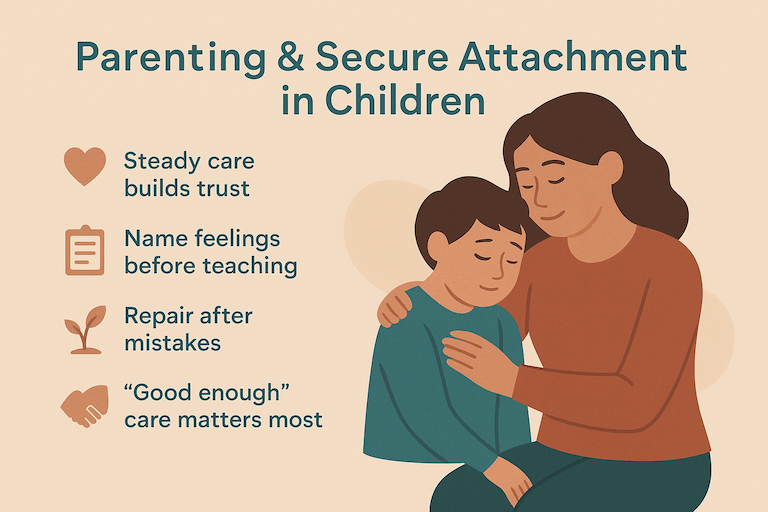
Children build secure attachment through steady, warm care. The primary caregiver and attachment figure play a crucial role in shaping a child's attachment relationship and overall child development. When you name feelings and offer comfort first, their body learns that emotions are safe. Once they are calm, you can guide or teach. A securely attached child benefits from emotional availability and a nurturing primary attachment figure, which fosters resilience and confidence. Different attachment forms are identified through assessments like the strange situation, a classic tool for observing attachment behaviors.
When you make a mistake, and every parent does, repair by acknowledging it and reconnecting. Early attachment experiences are vital for infant mental health, child psychiatry, and affective development, influencing emotional regulation and psychological growth. When children grow up feeling safe and secure, they carry this attachment blueprint into adulthood, supporting healthy human development across the lifespan. The secure attachment type serves as a foundation for later social and emotional skills. Your consistent, good enough care matters far more than being perfect. Small daily moments of empathy, structure, and follow through create a strong sense of trust that lasts a lifetime.
How Therapy Helps
Therapy gives you a safe place to practice secure skills. You learn to notice triggers, speak needs, and repair well. Therapy can also help you understand and improve your adult attachment and adult attachment styles, which are key to healthy relationships. Young adults often benefit from therapy as they navigate attachment issues in relationships. At South Denver Therapy, couples therapist Kayla teaches simple tools you can use right away.
Want help building secure habits that last? If you are located in Colorado, book an appointment here.

Frequently Asked Questions About Secure Attachment Style
What is secure attachment style?
Secure attachment is a balanced and steady way of bonding where both closeness and space feel safe. You can trust others, express your needs, and repair after conflict without fear of rejection. Research in modern attachment theory shows that secure attachment develops through consistent, responsive care and continues to grow through healthy adult relationships.
How do I know if I have a secure attachment style?
People with secure attachment communicate clearly, set healthy boundaries, and support others while staying grounded in their own needs. You likely return to connection after tension, apologize when needed, and trust that relationships can be repaired. These behaviors are well-supported by studies in personality and social psychology.
Can I develop a secure attachment style later in life?
Yes. Secure attachment can be built through small, daily habits. Practice self-soothing, name your needs out loud, and work on repairing conflict instead of avoiding it. Supportive therapy or consistent relationships can help you strengthen security over time, as shown in attachment research and social psychology journals.
What is one quick exercise to build secure attachment?
Try the 30-Second Soothe. Place your hand on your chest, breathe in for four counts, out for six, and say something kind to yourself like, "I am safe and can handle this." Then share one simple, honest need with someone you trust.
How does someone with secure attachment handle jealousy?
Secure individuals pause to calm their body, check the facts, and talk openly about their feelings. They ask for reassurance respectfully and also take responsibility for their own emotions. This builds trust and reduces misunderstandings.
Is secure attachment the same as being independent?
Not quite. Secure attachment balances connection and independence. You can rely on others without losing your autonomy and still stand strong on your own. It's interdependence rather than full dependence or isolation.
Can people with secure attachment still argue?
Yes. Secure partners still experience conflict, but they focus on repair and understanding rather than blame. They cool down, listen to each other, and use conflict as a way to strengthen the relationship rather than damage it.
Related Reading
What Are Attachment Styles? – Learn how early relationships shape the way you connect and explore the four main attachment styles.
Anxious Attachment Style: Understanding Closeness, Reassurance, and How to Feel Secure – Learn how to calm anxiety in relationships, reduce overthinking, and build a greater sense of safety and trust.
Avoidant Attachment Style: Understanding Emotional Distance and How to Bridge It – Explore why independence can feel safer for avoidant partners and how to open up without losing your sense of self.
Disorganized Attachment Style: Signs, Healing Steps, and How to Feel Safe – Understand the push-pull pattern of wanting closeness but fearing it, and learn how to create stability and emotional safety in relationships.
Take the Free Attachment Style Quiz – Find out your attachment style in under two minutes and get personalized insights to help you build more secure connections.