Infidelity Statistics 2026: Cheating Rates, Affairs & Research Data
If you've ever wondered how common cheating really is, you're not alone. Affairs are one of the most painful experiences a relationship can face—and the statistics might surprise you.
Despite what social media makes it seem like, infidelity rates haven't dramatically increased in recent decades. But they're still more common than most couples realize. Here's what the research actually shows about cheating in 2026.
Key Infidelity Statistics at a Glance
2026 Infidelity Statistics Snapshot
How Common Is Cheating in Marriage?
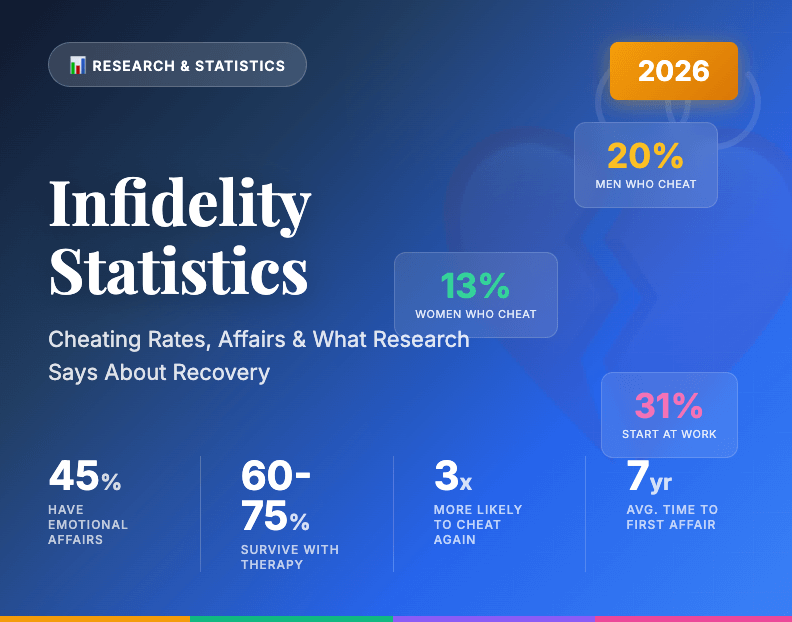
The often-cited claim that "half of all marriages experience infidelity" is overstated. Current research from the General Social Survey shows that approximately 20% of married men and 13% of married women report having had sex with someone other than their spouse while married.
When you include emotional affairs and other forms of infidelity beyond physical sex, those numbers climb significantly. The American Association for Marriage and Family Therapy reports that when counting emotional affairs and sexual intimacy short of intercourse, approximately 45% of men and 35% of women have engaged in some form of infidelity.
Infidelity Rates: Married vs. Unmarried Couples
Cheating isn't limited to marriage. Research shows unmarried couples actually experience higher rates of infidelity.
Infidelity Rates by Relationship Status
Source: Archives of Sexual Behavior, General Social Survey
Who Cheats More: Men or Women?
Despite changing gender norms, men are still more likely to cheat than women overall. However, the gap has been narrowing significantly over the past two decades.
Key findings:
20% of married men admit to cheating vs. 13% of married women
Women's infidelity rates have increased by 40% in the last 20 years
Among adults ages 18-29, women are actually slightly more likely to cheat (11% vs. 10%)
67% of men who cheat do so more than once, compared to 53% of women
How Men and Women Cheat Differently
Men and women tend to approach infidelity in different ways. Understanding these patterns can help couples recognize warning signs of affairs.
👨 How Men Typically Cheat
- More likely to engage in physical/sexual affairs
- 31% of affairs involve sexual acts without emotional attachment
- 27% cheat with strangers
- 44% cheat with coworkers
- Primary motivation: Sexual desire and variety
👩 How Women Typically Cheat
- More likely to have emotional affairs first
- 21% have romantic involvement without sex
- 53% cheat with a friend
- Only 9% cheat with strangers
- Primary motivation: Emotional neglect (70%)
Emotional Affairs vs. Physical Affairs
Not all infidelity involves sex. Emotional cheating has become increasingly common, especially with the rise of social media and messaging apps.
Research shows that 91.6% of women and 78.6% of men admit to having had an emotional affair at some point. And 64% of couples say an emotional affair can be just as damaging—or even more harmful—than a physical affair.
Women tend to be more upset by emotional infidelity (73%), while men report greater distress over sexual infidelity. This difference in how partners experience betrayal often creates conflict when couples try to heal after an affair.

"Many people are surprised to learn that emotional affairs often cause more long-term damage than one-night stands. When your partner shares their innermost thoughts, dreams, and frustrations with someone else, it creates a level of intimacy that feels like a deeper betrayal than physical cheating alone."
Where Do Affairs Start?
Understanding where affairs begin can help couples protect their relationships. The research points to some clear patterns.
Where Affairs Typically Begin
Source: Superdrug Online Doctor Survey, Ashley Madison Research
Workplace Affairs: The Numbers
The workplace remains the most common setting for affairs to develop. Long hours, shared stress, and emotional bonding over work challenges create conditions where boundaries can blur.
31% of all affairs involve coworkers
57% of women and 62% of men admit to having an affair while traveling for business
37% of upper management employees report infidelity compared to just 9% of non-management employees
85% of affairs begin in workplace settings according to some estimates
Industries with the highest rates of workplace infidelity include sales (14.5%), education (13.7%), healthcare (9.8%), and hospitality (7.7%).
Infidelity by Age
Cheating patterns change significantly across different life stages.
Infidelity Rates by Age Group
| Age Group | Men | Women |
|---|---|---|
| 18-29 | 10% | 11% |
| 30-39 | 14% | 11% |
| 40-54 | 21% | 14% |
| 55-64 | 22% | 16% |
| 65+ | 24% | 8% |
Source: Institute for Family Studies, General Social Survey
Notable trends:
Women ages 18-29 are actually slightly more likely to cheat than men in the same age group
Men's infidelity rates peak in their 60s and 70s
Women's infidelity peaks in their 50s and 60s (the "gray affair" phenomenon)
Older adults today cheat more than older adults did in the year 2000
Why Do People Cheat?
Understanding the reasons behind infidelity can help couples address underlying issues before they lead to betrayal.
Top Reasons Women Cheat
- Emotional neglect (70%)
- Loneliness or boredom (30%)
- Feeling undervalued
- Lack of intimacy
- Partner cheated first (9%)
Top Reasons Men Cheat
- Sexual dissatisfaction (50%)
- Desire for variety
- Opportunity presented itself
- Physical attraction to someone else
- Feeling neglected
A 2020 study published in the Journal of Sex & Marital Therapy identified eight primary motivations for infidelity: anger, low self-esteem, lack of love, low commitment, need for variety, neglect, sexual desire, and situation/opportunity.
Surprisingly, 56% of men and 34% of women who cheat rate their marriages as "happy" or "very happy"—which complicates the narrative that only unhappy people have affairs.
How Long Do Affairs Last?
Most affairs are relatively short-lived. Research shows:
25% of affairs end within one week
65% end within the first six months
Only 10% develop into long-term affairs
The average affair lasts about 6 months to 2 years
The average married woman has her first affair approximately 7 years into marriage, often after noticing a decline in sexual frequency and quality around the 5-year mark.
Will a Cheater Cheat Again?
One of the most common questions after discovering infidelity is whether it will happen again.
The research here is sobering: a person who has cheated is 3 times more likely to cheat again in future relationships. Even more concerning, people who have been cheated on are 2-4 times more likely to be cheated on again by their next partner.
This doesn't mean change is impossible. With proper therapy and genuine commitment to rebuilding trust, many individuals break this cycle. But it does underscore why addressing the root causes—not just the behavior—is so important.
Can Marriages Survive Infidelity?
This is the question couples facing betrayal most want answered. And the research offers real hope.
✓ Marriage Survival Rates After Infidelity
Key findings on recovery:
60-75% of marriages survive infidelity when couples seek professional help
A 2012 AAMFT survey found 74% of couples who underwent therapy after infidelity successfully recovered
Without professional intervention, only about 15.6% of relationships survive
When the unfaithful partner shows genuine remorse, success rates jump to around 80%
The reconciliation process typically takes 2-5 years
Most couples (60%) actively attempt to repair their relationship after discovering an affair. The biggest predictors of success include the unfaithful partner taking full responsibility, genuine remorse, willingness to be completely transparent, and commitment to couples therapy.
"The couples I've worked with who successfully heal after an affair aren't the ones who 'get over it' quickly. They're the ones willing to do the hard work of understanding what led to the betrayal, rebuilding trust brick by brick, and creating a new relationship that's actually stronger than before. It's possible—but it requires both partners to be fully committed to the process."
Infidelity and Divorce Statistics
While many marriages survive affairs, infidelity remains a leading cause of divorce.
20-40% of all divorces are primarily caused by infidelity
88% of divorced couples identified infidelity as a key reason for their split
69% of marriages break up after an affair is discovered (when no therapy is sought)
Men who marry their affair partners have a 75% divorce rate
The financial impact is also significant. The average divorce costs $7,000-$15,000 in legal fees alone—not counting the ongoing financial impact of maintaining separate households.
Online Infidelity and Social Media Affairs
Technology has created new opportunities for cheating. Social media has been called a "cheating machine" because of how easily it facilitates connections outside marriage.
Nearly two-thirds of Tinder users are already in a committed relationship
25% of workplace affairs are now initiated through social media platforms
10% of cheating adults have formed intimate online relationships
8% have engaged in cybersex
6% have met their online affair partners in person
Signs of digital infidelity include spending excessive time online in private, being secretive about messages, and deleting texts or search history.
Infidelity Statistics by State
Cheating rates vary significantly across the United States.
States with the highest infidelity rates:
Texas
Nebraska
Alabama
Nevada
Oklahoma
Cities with the most unfaithful partners (according to Ashley Madison data):
Columbus, Ohio
Miami, Florida
Orlando, Florida
Southern states generally have higher divorce rates and infidelity rates than Northeastern states.
🗺️ Highest Infidelity States
🏙️ Most Unfaithful Cities
Regional pattern: Southern states consistently show higher infidelity and divorce rates than Northeastern states.
Source: Solitaire Bliss Survey (2023), Ashley Madison Data
Recognizing the Warning Signs
If you're worried about infidelity in your relationship, learning to recognize signs your spouse may be cheating can help you address concerns before they escalate.
Common red flags include:
Increased secrecy with phone or computer
Working late more often
Emotional distance or withdrawal
Changes in sexual interest (either direction)
Defensive reactions to innocent questions
Unexplained expenses
However, these signs don't always indicate infidelity. Open communication with your partner is always the best first step.
Getting Help After Infidelity
Whether you've just discovered an affair or you're struggling with the aftermath of betrayal, professional support can make a significant difference in your healing journey.
Infidelity therapy helps couples:
Process the shock and trauma of discovery
Understand the factors that contributed to the affair
Rebuild trust systematically
Develop better communication patterns
Decide whether to stay together or separate
If you're in the Castle Rock, Parker, or greater Denver area and dealing with infidelity, South Denver Therapy offers specialized affair recovery counseling to help couples navigate this painful experience.
Frequently Asked Questions About Infidelity
Related Resources
For more information on relationships, trust, and healing after betrayal: