Anxiety in Men: Why It Often Goes Undiagnosed
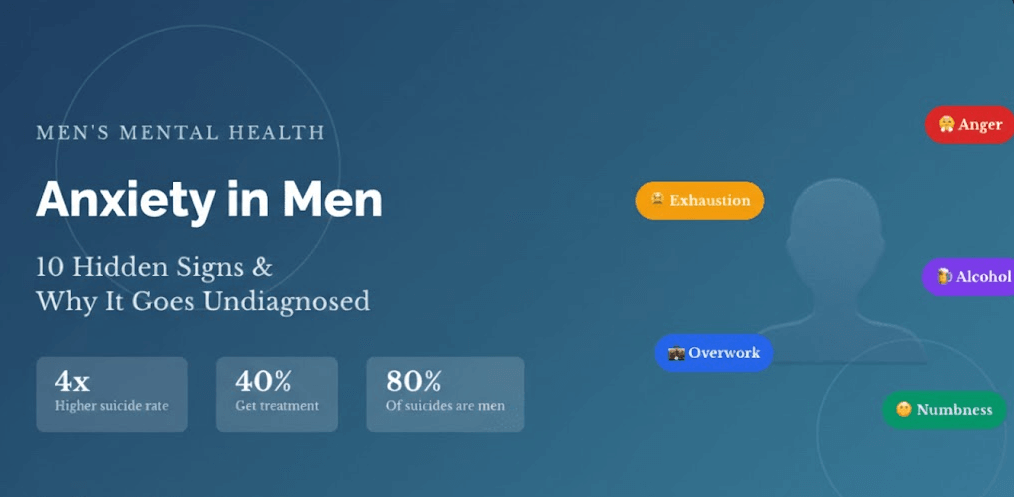
You snap at your partner over something small. You're drinking more to take the edge off. You can't sleep because your mind won't stop racing with worst-case scenarios about work, money, or your family.
You're exhausted all the time, but you keep pushing through—because that's what you do. That's what you've always done.
Here's what no one told you: This isn't just stress. This might be anxiety.
And if you're a man, there's a good chance it's gone unrecognized for years.
Sources: CDC 2023, NIMH 2021, Primary Care Companion for CNS Disorders
The Problem No One's Talking About
Anxiety doesn't always look like what you'd expect. The stereotype—someone visibly nervous, fidgeting, avoiding social situations—describes some people. But for many men, anxiety shows up differently.
It looks like a short temper. Like needing a few drinks to relax. Like obsessing over work to the point of exhaustion. Like physical symptoms your doctor can't explain.
Because anxiety in men often presents in unexpected ways, it frequently goes undiagnosed. Men are less likely to seek treatment for mental health conditions and more likely to cope in ways that mask what's really happening underneath.
The consequences of this disconnect are devastating. Men die by suicide nearly 4 times more than women, yet they're far less likely to have received a mental health diagnosis or treatment beforehand.
Something isn't adding up. And it starts with recognizing what anxiety actually looks like in men.
Anxiety in Men vs. Women: What the Research Shows
According to the National Institute of Mental Health, 14.3% of men experience an anxiety disorder in any given year, compared to 23.4% of women. On the surface, this suggests women are almost twice as likely to have anxiety.
But here's what those numbers don't capture: men are significantly less likely to seek help, receive a diagnosis, or report their symptoms accurately.
The paradox: Women are diagnosed with anxiety more often, but men have a 4x higher suicide rate. This suggests male anxiety is being significantly underdiagnosed and undertreated.
Research published in the Journal of Psychiatric Research found some important differences in how anxiety affects men versus women:
Men with anxiety are more likely to be diagnosed with substance abuse disorders, ADHD, or intermittent explosive disorder
Women with anxiety are more likely to be diagnosed with additional anxiety disorders or depression
Men are more likely to cope through alcohol and substance use
Women are more likely to cope through avoidance behaviors
The same study found no difference in the age of onset between genders—anxiety can start at any point in life for both men and women. The difference lies in how it shows up and whether it gets recognized.
Why Anxiety in Men Goes Undiagnosed
Several factors contribute to the underdiagnosis of male anxiety:
1. Symptoms Present Differently
Classic anxiety symptoms—excessive worry, visible nervousness, panic attacks—are how many clinicians learn to identify the condition. But men often present with:
Anger and irritability
Aggression or controlling behavior
Physical symptoms (headaches, muscle tension, digestive issues)
Sleep problems
Obsessive work habits
Substance use
When a man shows up at his doctor's office complaining of headaches and insomnia, anxiety might not be the first diagnosis considered. The AAMC reports that mental health providers may miss or misdiagnose psychological problems in men because of their own gender biases.
Anxiety: Textbook vs. Reality in Men
"Textbook" Anxiety
What many expect to see
- ❌ Visible nervousness
- ❌ Crying or tearfulness
- ❌ Avoiding all social situations
- ❌ Expressing fear openly
- ❌ Asking for help readily
Anxiety in Men
What often actually happens
- ✓ Anger, irritability, aggression
- ✓ Physical symptoms (headaches, GI issues)
- ✓ Overworking / perfectionism
- ✓ Alcohol / substance use
- ✓ Controlling behavior
2. Masculine Norms Discourage Help-Seeking
From a young age, many men learn that expressing vulnerability is weakness. Phrases like "man up," "tough it out," and "boys don't cry" shape how men relate to their emotions.
These cultural expectations create barriers at multiple levels:
Self-recognition: Men may not identify their symptoms as anxiety because they don't match the stereotype
Self-disclosure: Even when men recognize something is wrong, they may hesitate to talk about it
Treatment-seeking: Research consistently shows men hold more negative attitudes toward mental health services
A 2024 AAMC analysis found that in 2021, only 40% of men with a mental illness received treatment, compared to 52% of women.
3. Anxiety Gets Masked by Other Behaviors
When men don't have healthy outlets for anxiety, they often develop coping mechanisms that hide the underlying problem:
Alcohol use: According to the CDC, men are more likely than women to use alcohol to manage anxiety—which can temporarily relieve symptoms while making the underlying condition worse
Workaholism: Throwing yourself into work creates a distraction and gives a sense of control, but it's often a way to avoid confronting difficult emotions
Risk-taking behavior: Some men channel anxiety into activities that create an adrenaline rush, masking the underlying fear
Common Ways Men Mask Anxiety
Alcohol & Substances
Drinking to "take the edge off" or relax in social situations
Workaholism
Burying yourself in work to avoid facing difficult emotions
Anger & Aggression
Expressing anxiety as irritability because it feels more "acceptable"
Avoidance & Isolation
Withdrawing from people and situations that trigger discomfort
These behaviors provide temporary relief but ultimately make anxiety worse over time.
4. Healthcare Providers Miss the Signs
Studies show concerning rates of missed diagnoses in primary care settings. Research published in Primary Care Companion for CNS Disorders found misdiagnosis rates as high as 71% for generalized anxiety disorder.
When men do seek care, they're more likely to report physical symptoms than emotional ones. A man might describe chest tightness, fatigue, and trouble sleeping without mentioning the constant worry underneath. Without specific screening, the anxiety connection can be missed entirely.
10 Hidden Signs of Anxiety in Men
If you're wondering whether what you're experiencing might be anxiety, here are 10 signs that are common in men but often go unrecognized:
How Many Signs Apply to You?
Check any that you've experienced regularly over the past month
If you checked 3 or more: Consider taking our full anxiety assessment or scheduling a consultation to discuss what you're experiencing.
1. Irritability and a Short Fuse
You find yourself snapping at small things. Traffic makes you furious. Minor inconveniences feel overwhelming. This anger might actually be anxiety presenting in a more "acceptable" masculine form.
2. Physical Symptoms Without a Clear Cause
Chronic headaches, muscle tension (especially in the jaw, neck, and shoulders), digestive issues, and unexplained fatigue can all be physical manifestations of anxiety. Many men visit multiple doctors looking for answers without considering anxiety as the source.
3. Difficulty Sleeping
Your mind races at night, replaying conversations or anticipating problems. Or you fall asleep exhausted but wake up at 3 AM with your heart pounding. Sleep disturbances and anxiety are closely connected.
4. Relying on Alcohol to Relax
If you need a few drinks to unwind after work, feel anxious in social situations without alcohol, or find yourself drinking more than you used to, you might be self-medicating underlying anxiety.
5. Obsessing Over Work or Achievements
Workaholism can be anxiety in disguise. If you can't stop thinking about work, feel driven to constantly achieve more, or struggle to relax even on vacation, anxiety might be the driving force.
6. Controlling Behavior
Anxiety often stems from feeling out of control. Some men compensate by becoming overly controlling—of schedules, household routines, finances, or their partner's behavior. This can damage relationships and mask the underlying fear.
7. Avoiding Situations That Trigger Discomfort
You might turn down social invitations, avoid difficult conversations, or procrastinate on tasks that make you anxious. This avoidance provides temporary relief but reinforces anxiety over time.
8. Difficulty Concentrating
When your mind is flooded with worry, it's hard to focus on the task at hand. You might find yourself reading the same paragraph multiple times or struggling to stay present in conversations.
9. Excessive Need for Reassurance
Constantly seeking validation from your partner, asking if things are "okay," or needing repeated confirmation about decisions can indicate underlying anxiety about relationships or your own judgment.
10. Emotional Numbness or Detachment
Some men cope with anxiety by shutting down emotionally—feeling disconnected from their feelings, going through the motions, or struggling to experience joy even during good times.
The High Stakes of Untreated Anxiety
When anxiety in men goes unrecognized and untreated, the consequences extend far beyond daily discomfort.
Mental Health
- • Depression (often co-occurs)
- • Substance use disorders
- • Suicidal thoughts
Physical Health
- • Cardiovascular problems
- • Weakened immune system
- • Chronic pain & fatigue
Relationships
- • Partner conflict & distance
- • Emotional unavailability
- • Social isolation
Life & Career
- • Impaired job performance
- • Missed opportunities
- • Reduced quality of life
Mental Health Consequences
Untreated anxiety tends to get worse over time. It increases the risk of developing depression, substance use disorders, and other mental health conditions. Research shows anxiety and depression frequently co-occur, with each condition making the other more severe.
Physical Health Consequences
Chronic anxiety takes a toll on your body. The persistent stress response contributes to:
Cardiovascular problems
Weakened immune system
Chronic pain conditions
Digestive disorders
Sleep disorders
Relationship Consequences
Anxiety affects how you show up in your relationships. Irritability, emotional unavailability, controlling behavior, and difficulty communicating can strain marriages and partnerships. Many couples who come to couples therapy discover that one or both partners has untreated anxiety contributing to their relationship problems.
The Ultimate Cost
Perhaps most tragic: men are nearly 4 times more likely to die by suicide than women, yet they're far less likely to have received mental health treatment. AAMC research found that more than 60% of men who died by suicide had accessed mental health care services within the previous year—suggesting that even when men do seek help, their needs may not be adequately addressed.
Effective Treatment for Anxiety in Men
The good news: anxiety is highly treatable. With the right approach, most men experience significant improvement in their symptoms and quality of life.
Evidence-Based Treatment Options
Cognitive Behavioral Therapy (CBT)
CBT is one of the most researched and effective treatments for anxiety. It helps you identify thought patterns that fuel anxiety and develop practical strategies to manage symptoms. Many men appreciate CBT's problem-solving, skill-building approach.
EMDR Therapy
EMDR therapy is especially effective when anxiety is rooted in past experiences or trauma. It helps the brain reprocess difficult memories that may be driving current anxiety symptoms—often faster than traditional talk therapy.
Lifestyle Modifications
Physical health and mental health are deeply connected. Regular exercise, quality sleep, reduced caffeine and alcohol, and stress management techniques all support anxiety recovery.
Medication
For some men, anti-anxiety medication or antidepressants can help manage symptoms while building other coping skills. A psychiatrist or your primary care provider can discuss whether medication might be appropriate for your situation.
Many men I work with are surprised to learn that their anger, sleeplessness, or constant need to stay busy are actually signs of anxiety. Once they understand what's driving these patterns, relief becomes possible. Getting help isn't a sign of weakness—it's one of the strongest decisions you can make.
When to Get Help
If you're experiencing any of these signs of anxiety, you don't have to wait until things get worse to seek help:
🚦 It's Time to Reach Out If...
Your symptoms are affecting your work performance
Your relationships are suffering
You're relying on alcohol or other substances to cope
You're experiencing physical symptoms you can't explain
You don't enjoy things you used to enjoy
You've been feeling this way for more than a few weeks
Breaking the Stigma
Getting help for anxiety isn't weakness—it's wisdom. It takes strength to acknowledge you're struggling and courage to do something about it.
At South Denver Therapy, we work with men throughout Castle Rock, Parker, Highlands Ranch, and the broader Denver metro area who are learning to recognize and manage anxiety. Our approach is practical, evidence-based, and designed to help you feel better without sacrificing who you are.
If you're ready to take the first step, schedule a free consultation today. You don't have to figure this out alone.
You Don't Have to Figure This Out Alone
Getting help for anxiety isn't weakness—it's wisdom. Our therapists specialize in working with men who are ready to feel better without sacrificing who they are.
Serving Castle Rock, Parker, Highlands Ranch & the Denver metro area
Frequently Asked Questions About Anxiety in Men
How common is anxiety in men?
According to the National Institute of Mental Health, 14.3% of men experience an anxiety disorder in any given year, compared to 23.4% of women. However, these numbers likely underestimate male anxiety because men are significantly less likely to seek help, receive a diagnosis, or report their symptoms accurately. Only 40% of men with mental illness receive treatment compared to 52% of women, suggesting anxiety in men is significantly underdiagnosed.
Why does anxiety in men go undiagnosed?
Anxiety in men goes undiagnosed for several reasons. Men's symptoms often present differently as anger, irritability, physical complaints, or substance use rather than classic nervousness. Masculine norms discourage help-seeking, with phrases like "man up" shaping how men relate to emotions. Men often mask anxiety with alcohol, workaholism, or risk-taking behavior. Healthcare providers may miss the signs due to gender biases, with misdiagnosis rates as high as 71% for generalized anxiety disorder in primary care settings.
What are the hidden signs of anxiety in men?
The 10 hidden signs of anxiety in men include irritability and a short fuse, physical symptoms without a clear cause like headaches and muscle tension, difficulty sleeping or racing thoughts at night, relying on alcohol to relax, obsessing over work or achievements, controlling behavior, avoiding uncomfortable situations, difficulty concentrating, excessive need for reassurance, and emotional numbness or detachment. These signs often go unrecognized because they don't match the stereotype of anxiety.
How does anxiety present differently in men vs women?
Research shows important differences in how anxiety affects men versus women. Men with anxiety are more likely to be diagnosed with substance abuse disorders, ADHD, or intermittent explosive disorder. Women are more likely to be diagnosed with additional anxiety disorders or depression. Men are more likely to cope through alcohol and substance use, while women are more likely to cope through avoidance behaviors. Men often express anxiety as anger or physical symptoms rather than visible nervousness or worry.
What are the consequences of untreated anxiety in men?
Untreated anxiety in men has serious consequences. Mental health risks include depression, substance use disorders, and increased suicide risk. Men die by suicide nearly 4 times more than women. Physical health suffers with cardiovascular problems, weakened immune system, chronic pain, and digestive disorders. Relationships are impacted through irritability, emotional unavailability, and controlling behavior. More than 60% of men who died by suicide had accessed mental health care within the previous year, suggesting their needs weren't adequately addressed.
How do men commonly mask anxiety?
Men commonly mask anxiety through several behaviors. Alcohol use is common, with men more likely than women to drink to manage anxiety, which temporarily relieves symptoms while worsening the underlying condition. Workaholism creates distraction and a sense of control while avoiding difficult emotions. Anger and aggression become outlets because they feel more acceptable than expressing fear. Risk-taking behavior creates an adrenaline rush that masks underlying fear. These coping mechanisms provide temporary relief but make anxiety worse over time.
What treatments work best for anxiety in men?
Anxiety is highly treatable in men with the right approach. Cognitive Behavioral Therapy helps identify thought patterns fueling anxiety and develop practical coping strategies. Many men appreciate its problem-solving, skill-building approach. EMDR therapy is effective when anxiety is rooted in past experiences or trauma, often working faster than traditional talk therapy. Lifestyle modifications like exercise, quality sleep, and reduced alcohol support recovery. Medication may help some men manage symptoms while building other coping skills.
When should men seek help for anxiety?
Men should seek help for anxiety when symptoms affect work performance, relationships are suffering, they're relying on alcohol or substances to cope, they have physical symptoms doctors can't explain, they don't enjoy things they used to, or they've been feeling this way for more than a few weeks. Getting help for anxiety isn't weakness, it's wisdom. It takes strength to acknowledge you're struggling and courage to do something about it.
