Roommate Syndrome in Marriage: When Your Spouse Feels Like a Cohabitant
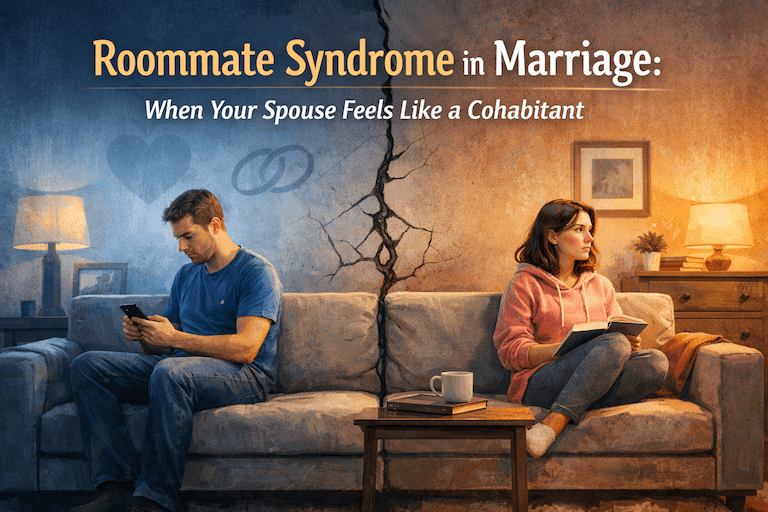
You and your spouse share a home, split the bills, coordinate schedules, and tag-team the kids' bedtime routine. You're efficient. You're organized. You're like a well-oiled machine.
But somewhere along the way, you stopped being lovers and became... roommates.
You can't remember the last time you had a real conversation that wasn't about whose turn it is to take out the trash. Date nights feel like ancient history. You sleep in the same bed but haven't touched each other in weeks. The passion is gone. The spark is gone. Sometimes it feels like the love is gone too.
If this sounds painfully familiar, you're experiencing what therapists call "roommate syndrome" in marriage. And you're far from alone.
Research from The Gottman Institute shows that 69% of relationship conflicts are perpetual, meaning they never fully get solved. Many couples respond by avoiding conflict altogether, which slowly transforms passionate partnerships into polite cohabitation.
But here's what you need to know: roommate syndrome doesn't mean your marriage is over. It means it needs attention.
Key Takeaways
Roommate syndrome happens when couples prioritize logistics over connection, losing emotional and physical intimacy
Warning signs include surface-level conversations, no physical affection, separate lives, and feeling lonely in your marriage
The shift is gradual - it happens over months or years as life's demands crowd out romance
Gottman research shows couples need a 5:1 ratio of positive to negative interactions to thrive
Recovery is possible with intentional effort to rebuild emotional connection, physical intimacy, and shared experiences
Professional help works - couples therapy gives you tools to reconnect before resentment becomes permanent
What Is Roommate Syndrome in Marriage?
Roommate syndrome (sometimes called the "roommate phase" in marriage) describes what happens when married couples function more like housemates than romantic partners. You share space, responsibilities, and maybe even friendly conversation, but the emotional connection, physical intimacy, and romantic spark have faded.
You're living parallel lives under the same roof instead of building a life together.
Dr. John Gottman's decades of research with thousands of couples shows that marriages don't usually end because of big explosive conflicts. They end because of what he calls "emotional disengagement." Partners stop turning toward each other and start turning away. Connection erodes one missed moment at a time.
When you're experiencing roommate syndrome, you might still care about each other. You might even still love each other. But you've stopped nurturing the romance, vulnerability, and intimacy that make a marriage feel like more than a domestic partnership.
The good news? This pattern is reversible. Understanding what's happening is the first step to getting your romantic partnership back.
🔍 Take the Roommate Syndrome Quiz
Answer these questions honestly to see if you're experiencing roommate syndrome in your marriage.
✓ Check all statements that are true for your relationship
The Warning Signs: Are You Living Like Roommates?
Let's look at the specific signs that indicate you've shifted from romantic partners to cohabitants.
1. Your Conversations Stay Surface-Level
You talk about what needs to get done. Who's picking up groceries. When the kids have soccer practice. Whose turn it is to take out the trash.
But you don't talk about feelings, dreams, fears, or what's happening in your inner world. You've lost curiosity about each other's thoughts and emotions.
Healthy marriages maintain deep conversations alongside the logistics. Partners ask "How are you really doing?" and actually listen to the answer.
2. Physical Intimacy Has Disappeared
This isn't just about sex, though that's often affected too. It's the goodbye kisses that stopped. The hand-holding during movies. The hugs when you get home from work. The cuddling in bed before sleep.
Physical touch creates emotional connection. When couples stop touching, they start feeling like strangers sharing space.
If you're noticing a pattern of avoiding physical connection, you might also recognize some of the signs of marriage problems that therapists warn about.
3. You Live Separate Lives
You have your hobbies. They have theirs. You watch your shows. They watch theirs. You go to bed at different times. You spend weekends doing different activities.
There's nothing wrong with having individual interests. But when couples spend most of their time apart, choosing separate activities over shared experiences, connection withers.
4. You Feel Lonely in Your Marriage
This might be the most painful sign. You're married, but you feel alone. You're lying next to your spouse every night but feel completely disconnected.
Loneliness in marriage hurts worse than being single because you expected partnership and instead got isolation.
5. You've Become Efficient Co-Managers
You're great at running the household. Bills get paid. Kids get to school. The house stays relatively clean. You're an effective team for managing life's logistics.
But teamwork without emotional intimacy is just a business partnership. Marriage needs more than efficiency.
6. Conflict Avoidance Has Become Your Default
You used to fight. Now you just... don't. Not because you've magically resolved all your differences, but because you've stopped engaging.
It feels peaceful. But this isn't peace. It's disconnection. Avoiding conflict means avoiding vulnerability, which means avoiding intimacy.
Research shows that 69% of relationship conflicts are perpetual. Healthy couples learn to manage these ongoing differences with respect and humor. Roommate couples stop discussing them altogether.
7. Romance Feels Like Ancient History
You can't remember the last time you:
Went on an actual date
Bought each other a thoughtful gift
Planned a surprise
Said "I love you" and meant it
Flirted or felt desired
Romance isn't frivolous. It's the fuel that keeps marriages alive. When it dies, so does the feeling of being "in love."
| Healthy Marriage ✓ | Roommate Syndrome ✗ |
|---|---|
| Deep conversations about feelings, dreams, and fears | Only talk about schedules, bills, and logistics |
| Regular physical affection (hugs, kisses, cuddling) | No touching or physical intimacy |
| Prioritize quality time and shared experiences | Spend most free time doing separate activities |
| Fight fair and work through conflicts together | Avoid conflict entirely or shut down during disagreements |
| Feel connected and emotionally supported | Feel lonely even when together |
| Maintain romance, flirtation, and passion | Romance is rare or nonexistent |
Why Does Roommate Syndrome Happen?
Understanding why couples drift into roommate syndrome helps you fix it. Here are the most common causes.
Life Gets Busy and Chaotic
Kids. Work. Bills. Aging parents. Home repairs. Health issues. Soccer practice. PTA meetings.
Life's demands are relentless. When you're exhausted from managing everything, romance feels like a luxury you can't afford.
But here's the truth: your marriage is not a luxury. It's the foundation everything else rests on.
You Stopped Prioritizing Each Other
When you were dating, you made time for each other. You planned dates. You sent texts just to say you were thinking of them. You stayed up late talking.
Then you got married, and other things took priority. The relationship you once nurtured got pushed to the bottom of the to-do list.
Marriages don't maintain themselves. Connection requires consistent, intentional effort.
Conflict Avoidance Replaced Real Communication
Maybe you used to fight. Maybe those fights felt terrible. So you stopped engaging in difficult conversations.
But conflict avoidance doesn't create harmony. It creates emotional distance. When you stop sharing what bothers you, you stop sharing yourself.
Dr. Gottman's research shows that successful couples don't avoid conflict. They learn to fight fair, using repair attempts and maintaining respect even during disagreements.
If you struggle with healthy conflict, our Conflict Resolution Worksheet can help you start having productive conversations.
Physical Intimacy Became Optional
When life gets stressful, sex often falls off the priority list. Maybe you were tired. Maybe you felt disconnected. Maybe resentment built up.
But physical intimacy creates emotional closeness. When couples stop being physically intimate, they lose one of the primary ways they connect and bond.
You Fell Into Parallel Routines
You each have your morning routine, your work schedule, your evening activities, your weekend plans. Over time, these routines became separate instead of shared.
You're living parallel lives in the same house instead of building a shared life together.
The Friendship Faded
Before you were lovers, you were friends. You enjoyed each other's company. You laughed together. You were genuinely interested in each other's thoughts and experiences.
Gottman's research shows that strong marriages are built on deep friendship. When that friendship erodes, so does everything else.
Nobody plans to become roommates with their spouse. It happens so gradually you don't notice until you're already there. That's actually why it's so fixable—you didn't break anything. You just stopped tending to something. And neglected things can be brought back to life with attention.
Kayla Crane, LMFT
Licensed Marriage & Family Therapist
How Roommate Syndrome Hurts Your Marriage
Living like roommates might feel "fine" on the surface, but it causes real damage over time.
Emotional Disconnection Deepens
The longer you live as roommates, the more you forget how to be vulnerable with each other. This pattern of emotional neglect creates walls that become harder to break down over time.
Resentment Builds Quietly
You resent that they never initiate affection. They resent that you always seem too tired. Both of you resent feeling lonely in your own marriage.
Unspoken resentment is relationship poison. It turns neutral actions into annoyances and makes reconnection feel impossible.
You're Modeling Lovelessness for Your Kids
If you have children, they're watching how you interact with your spouse. They're learning what marriage looks like by watching yours.
Is that the relationship you want them to replicate in their own lives?
One Partner Often Checks Out Completely
When roommate syndrome continues unchecked, one partner eventually gives up hope that things will change. If you're seeing multiple signs your marriage might be over, it's time to take immediate action.
This is the danger zone. Once emotional investment is gone, reconnection becomes much harder.
Affairs or Emotional Cheating Become Tempting
When emotional and physical needs aren't being met at home, the temptation to find connection elsewhere grows stronger.
Infidelity isn't inevitable, but unmet needs create vulnerability. If you're already experiencing disconnection and notice signs of cheating, addressing both issues immediately is critical.
How to Reconnect: Moving From Roommates to Romance
Here's the good news: roommate syndrome is reversible. Here's how to rebuild your romantic connection.
Step 1: Acknowledge the Problem Together
You can't fix what you won't name. Have an honest conversation with your spouse about feeling disconnected.
Try this opener: "I've been feeling like we're more roommates than romantic partners lately. I miss feeling connected to you. Can we talk about how to get that closeness back?"
This conversation takes courage. It also takes vulnerability, which is exactly what your relationship needs.
Step 2: Prioritize Daily Connection Rituals
Dr. Gottman recommends building small, consistent moments of connection into your daily routine:
The 6-Second Kiss
Not a peck. An actual six-second kiss when you say goodbye and when you reunite. This creates oxytocin (the bonding hormone) and reminds you that you're lovers, not just co-parents.
The Daily Check-In
Spend 10-15 minutes each day talking about something other than logistics. Ask about their day, their feelings, their thoughts. Actually listen.
Turn Toward Bids for Connection
When your partner says "Look at that sunset," don't just grunt. Put down your phone, look at the sunset, and engage. These tiny moments build or destroy intimacy.
Our free Daily Connection Guide gives you specific prompts for rebuilding closeness through small daily actions.
Step 3: Bring Back Date Nights (For Real This Time)
Date nights can't just be "we'll do it when we have time." They need to be scheduled, protected, and prioritized.
Even if it's just two hours every other week, put it on the calendar. Hire a babysitter. Turn off your phones. Focus on each other.
And make it about connection, not just entertainment. Talk. Flirt. Remember why you fell in love.
Date night doesn't have to be expensive. What matters is undivided attention and shared experience.
Step 4: Rebuild Physical Intimacy Gradually
If physical touch has disappeared, trying to jump straight to sex often backfires. Start smaller:
Hold hands during a walk
Cuddle on the couch during a movie
Give a shoulder massage
Hug for more than three seconds
Kiss hello and goodbye (and make it meaningful)
Physical touch releases oxytocin and dopamine—the same chemicals that made you fall in love in the first place. Rebuild that chemical connection.
I always tell couples: don't start with sex. Start with a six-second kiss. Start with holding hands on the couch. Physical intimacy is like a muscle—if you haven't used it in months, you don't start with a marathon. You start with a walk around the block. Let your bodies remember each other gradually.
Kayla Crane, LMFT
Licensed Marriage & Family Therapist
Step 5: Create Shared Experiences and Rituals
Do things together. Try a new restaurant. Take a weekend trip. Start a hobby together. Watch a show you both enjoy.
Shared positive experiences create shared positive memories. They give you things to talk about, laugh about, and look forward to.
Dr. Gottman's research shows that couples who create "rituals of connection"—weekly date nights, morning coffee together, Sunday hikes—maintain stronger relationships than those who don't.
Step 6: Learn to Fight Fair
Avoiding conflict doesn't create peace. It creates distance. Learn to disagree respectfully so you can address issues instead of burying them.
Key skills:
Use "I feel" statements instead of "You always/never"
Stay focused on one issue at a time
Take breaks if you're flooded emotionally
Make repair attempts ("Can we start over?")
Remember you're on the same team
Our Conflict Resolution Worksheet walks you through these skills step by step.
Step 7: Rediscover Your Friendship
Remember when you used to talk for hours? When you actually enjoyed each other's company? Get that back.
Ask questions. Show genuine interest. Laugh together. Be playful. Remember what you liked about this person in the first place.
Gottman's research is clear: friendship is the foundation of lasting romance. Rebuild the friendship, and the passion often follows.
Step 8: Get Professional Help
Sometimes you need more than self-help. Sometimes you need a trained couples therapist who can identify your specific patterns and teach you tools for breaking them.
Couples therapy isn't admitting failure. It's choosing your relationship.
At South Denver Therapy, we help couples throughout Castle Rock, Parker, Highlands Ranch, and the South Denver metro reconnect after months or years of living like roommates.
We teach you:
How to rebuild emotional intimacy
Communication skills that actually work
How to navigate conflict without shutting down
Tools for rekindling physical connection
How to prioritize your marriage even when life is chaotic
Most couples notice improvement within 8-12 sessions. The question isn't whether your marriage can be saved. The question is whether you're both willing to do the work.
The Research: Why Roommate Syndrome Is So Common
Understanding the data helps you see this isn't about personal failure. It's a common pattern many couples fall into.
69% of relationship conflicts are perpetual
Source: The Gottman Institute
These ongoing differences never get fully "resolved." Healthy couples manage them with humor and acceptance. Roommate couples avoid discussing them, which creates distance.
Couples need a 5:1 ratio of positive to negative interactions
Source: Dr. John Gottman's research
During conflict, healthy marriages maintain five positive interactions for every negative one. In everyday moments, that ratio needs to be even higher (20:1). When negativity dominates, connection dies.
The average couple waits 6 years before seeking help
Source: The Gottman Institute
Six years of patterns becoming entrenched. Six years of resentment building. Don't make this mistake. Get help early, while reconnection is still relatively easy.
73% of marriages survive affairs with proper therapy
Source: Clinical research on infidelity recovery
Even extreme betrayal can be healed when both partners commit to the process. If marriages can recover from affairs, they can absolutely recover from roommate syndrome.
Emotional connection predicts marriage success better than conflict frequency
Source: Dr. John Gottman
Couples who fight a lot can thrive if they maintain emotional connection. Couples who never fight but have no connection are at high risk for divorce.
Free Resources to Help You Reconnect
Daily Connection Guide
Simple daily prompts to rebuild emotional intimacy, even when you're busy.
Bringing the Joy Back Worksheets
Exercises to rediscover what you love about your partner and your relationship.
Couples Journal
44-page workbook with questions for deeper connection and understanding.
Conflict Resolution Worksheet
Step-by-step guide to fighting fair and finding solutions.
When Roommate Syndrome Might Mean Something Deeper
Sometimes what starts as roommate syndrome progresses into a loveless marriage where both emotional and romantic connection have disappeared. The good news is both patterns can be reversed with the right help.
Depression or anxiety affecting one or both partners
Mental health struggles kill libido, energy, and emotional availability. Treating the underlying condition often improves the relationship.
Unresolved resentment or betrayal
If trust was broken (through infidelity, lies, or broken promises), emotional distance is a protective response. Infidelity therapy can help you decide whether to rebuild or move on.
Fundamental incompatibility
Sometimes people grow in different directions. Sometimes values shift. Sometimes you realize you want fundamentally different lives. Couples therapy can help you make that difficult decision with clarity.
Trauma responses
If one partner experienced sexual trauma, emotional abuse, or attachment wounds, physical and emotional intimacy can trigger fear. Individual therapy alongside couples work often helps.
If you suspect deeper issues, don't try to fix this alone. Professional support makes a huge difference.
Frequently Asked Questions About Roommate Syndrome
Is it normal to go through a roommate phase in marriage?
Yes, many couples experience periods of feeling more like roommates, especially during stressful life transitions like having kids, career changes, or health challenges. What's not normal is staying stuck in that pattern indefinitely. The key is recognizing it's happening and actively working to reconnect before the distance becomes permanent.
How long does it take to recover from roommate syndrome?
Recovery time depends on how long the pattern has existed, how willing both partners are to work on reconnection, and whether you're getting professional help. Some couples notice improvement within weeks of making intentional changes. Others need months of consistent effort, especially if resentment has built up. With couples therapy, most couples see meaningful progress within 8 to 12 sessions.
Can a marriage survive roommate syndrome?
Absolutely. Roommate syndrome doesn't mean your marriage is over. It means your marriage needs attention and intentional effort to rebuild emotional and physical connection. With commitment from both partners and often with professional guidance, couples regularly move from feeling like roommates back to feeling like romantic partners. The question isn't whether it can be fixed, but whether both of you are willing to do the work.
What if my spouse doesn't think we have a problem?
This is frustrating but common. One partner often notices the disconnection first. Try sharing how you feel without blaming. Instead of "You never want to be intimate anymore," try "I miss feeling close to you. I'd love to rebuild that connection." If they still won't engage, individual therapy can help you decide your next steps. Sometimes seeing you work on yourself inspires them to join the process.
How is roommate syndrome different from just being comfortable in your marriage?
Comfort in marriage is healthy. It means you feel safe, accepted, and relaxed with your partner. Roommate syndrome is when comfort has crossed into disconnection. The difference is emotional and physical intimacy. Comfortable couples still touch, talk deeply, prioritize each other, and maintain romance alongside the ease. Roommate couples have lost those elements and replaced connection with efficient coexistence.
We're in the roommate phase but still have sex sometimes. Does that mean we're fine?
Not necessarily. Sex can happen without emotional intimacy or romantic connection. If sex feels mechanical, obligatory, or emotionally empty, it's not creating true intimacy. Healthy sexual connection requires emotional vulnerability, not just physical acts. Look at the bigger picture. Are you emotionally connected? Do you have deep conversations? Do you prioritize each other? Sex alone doesn't guarantee a healthy marriage.
Can having kids cause roommate syndrome?
Yes, having children is one of the most common triggers for roommate syndrome. Babies and young children demand constant attention, leaving little time or energy for romance. Many couples shift into "survival mode" and forget to nurture their relationship. The stress, exhaustion, and role shift from lovers to co-parents can create significant distance. The key is recognizing this risk and intentionally protecting your connection even during demanding parenting years.
What if I don't even know if I still love my spouse?
Feeling numb or uncertain about your feelings is a common result of long-term disconnection. Love is both a feeling and a choice, and feelings can return when connection is rebuilt. Many couples who felt "nothing" after years of roommate syndrome rediscovered love once they started doing the work of reconnection. Give the process a real chance before making permanent decisions. Couples therapy can help you figure out whether love can be rekindled or whether you've truly grown apart.
Your Marriage Deserves More Than Coexistence
You didn't get married to live like roommates. You got married for partnership, intimacy, passion, and deep connection.
If those things have faded, it doesn't mean your marriage is broken beyond repair. It means you need to start prioritizing your relationship again.
Start small:
Have one real conversation today
Touch your partner intentionally (a hug, holding hands)
Say "I love you" and mean it
Schedule one date night this month
And get support:
Download our free resources to start rebuilding connection today.
If you're ready for professional help, we're here. At South Denver Therapy, we help couples throughout Castle Rock, Parker, Highlands Ranch, Littleton, and the Denver area move from feeling like roommates back to feeling like romantic partners.
You don't have to settle for a loveless marriage. You don't have to feel lonely while married. And you don't have to figure this out alone.
Schedule a free 15-minute consultation and let's talk about how to get your romantic partnership back.
Your marriage is worth fighting for. Let us help you fight for it.